
June 3, 2026
Is Your St. Johns County Pool Actually Ready for the Next Florida Heatwave?
To be truly ready for a Florida heatwave, your pool needs stabilized chemistry, extended filtration cycles of 10–12 hours, and a strictly maintained water level to prevent pump failure. Without proactive cooling and sanitation adjustments, high temperatures and UV rays will deplete chlorine and trigger rapid algae blooms.
The Northeast Florida lifestyle is inextricably linked to the water. Whether you’re nestled in the manicured neighborhoods of Nocatee, overlooking the marshes in Ponte Vedra, or enjoying the historic breeze of St. Augustine, your backyard pool is more than a luxury—it is a thermal sanctuary.
However, as we move through 2026, the weather patterns in St. Johns County are becoming increasingly volatile. We aren't just dealing with "summer weather" anymore; we are dealing with sustained heat domes that push temperatures into the triple digits and keep humidity levels at saturation point. For a swimming pool, this isn't just a test of comfort; it is a test of chemistry and mechanical endurance.
Why is extreme heat so dangerous for Florida swimming pools?
Extreme heat accelerates algae growth, causes rapid chlorine evaporation through UV degradation, and increases mineral concentration via evaporation. As water temperatures rise above 90°F, the pool transitions from a refreshing retreat to a dynamic chemical reactor where bacteria thrive.
To understand why heatwaves are so dangerous for pools, we have to look at the chemistry of equilibrium. Most pool owners view their pool as a static body of water, but it is actually a dynamic chemical reactor. When the sun beats down on St. Johns County, several things happen simultaneously:
- UV Degradation: Ultraviolet rays act as a catalyst that breaks down chlorine molecules.
- Thermal Acceleration: Bacteria and algae are cold-blooded organisms. Their metabolic rate increases as the temperature rises. Water that is 80°F is safe; water that is 92°F is a breeding ground.
- Evaporative Concentration: As pure $H_2O$ evaporates, it leaves behind minerals, salts, and metals, effectively "thickening" the chemical soup of your pool.
How do you prevent a chlorine crisis during a heatwave?
You must maintain Cyanuric Acid (CYA) levels between 30–50 ppm to protect chlorine from UV rays while avoiding "Chlorine Lock." Additionally, shocking the pool at night allows the sanitizer to reset the water without being immediately neutralized by the morning sun.
In a standard Florida summer, a chlorinator or salt cell can usually keep up. But during a heatwave, the "demand" for sanitizer skyrockets.
The Role of Cyanuric Acid (CYA)
In our region, the sun is exceptionally intense. Without a stabilizer (Cyanuric Acid), the sun can strip 90% of your chlorine in two hours. However, many St. Johns County residents fall into the trap of "over-stabilization." If you use stabilized chlorine pucks (Trichlor), your CYA levels rise every week. Once they hit a certain threshold, they cause Chlorine Lock, where the chlorine is present in the water but chemically unable to kill bacteria.
- The Heatwave Strategy: Test your CYA now. If it’s above 80 ppm, consider a partial drain and refill to reach the 30–50 ppm "sweet spot."
Don't wait for the water to get cloudy. During a heatwave, the bather load (sweat, sunscreen, and skin oils) increases. Shocking the pool at night is essential to reset the pool for the following day’s heat.
Can you effectively cool down pool water when air temperatures are 100°F+?
Yes, you can lower pool temperatures by running water features like deck jets or bubblers at night to trigger evaporative cooling. Conversely, you should avoid using solar blankets or liquid covers during heatwaves, as these trap thermal energy and prevent the water from "breathing."
Once pool water exceeds 90°F, it loses its ability to refresh the human body, and the risk of heatstroke actually increases.
- Use Your Water Features: Run deck jets or sheer descents at night. As the water is sprayed through the cooler night air, heat is exchanged, and the temperature of the main body of water drops.
- Thermal Blankets: While solar blankets are great for February in St. Augustine, they are your enemy in July. Skip the liquid covers to allow the pool to release heat overnight.
How long should you run your pool pump during a Florida heatwave?
During a heatwave, pool pumps should run for at least 10 to 12 hours daily to handle the increased organic load. Homeowners with Variable Speed Pumps (VSP) should consider 24-hour operation at lower RPMs to ensure constant filtration and chemical distribution.
Your pool filter is the kidneys of your backyard. During a heatwave, those kidneys need to work overtime.
- Increasing Run Times: The old rule of thumb was 1 hour for every 10 degrees of ambient temperature. In a 100°F+ heatwave, that means a 10-hour minimum.
- Filter Hygiene: High heat means high organic load from pollen and sunscreen. If you have cartridge filters and haven't chemically cleaned them in six months, do it now. For sand filters, check for "channeling" where dirty water bypasses the media.
What are the infrastructure risks of high evaporation rates during a Florida heatwave?
The primary infrastructure risk is "pump cavitation" caused by a low water line, which leads to overheating, melted internal seals, and warped PVC plumbing. High evaporation also increases the concentration of corrosive minerals, which can degrade heater cores and salt cell plates over time.
The Skimmer Threat: A Critical Failure Point
The skimmer is the gateway between your pool and your filtration system. It is designed to pull water from the surface, but it has a physical limit.
- The Vortex Effect: When water drops too low, the skimmer creates a whirlpool that pulls air into the system. This causes the pump to lose its prime and stop moving water.
- Melted Seals: Without water to pull away heat, the pump’s internal temperature skyrockets. This quickly melts the "mechanical seal," allowing water to leak into and destroy the electric motor.
- Warped Pipes: A dry pump gets hot enough to soften and deform the attached PVC pipes. We frequently see "sagging" pipes in St. Johns County that require a total (and expensive) plumbing overhaul.
Concentrated Mineral Scaling
As water evaporates, it leaves everything else behind—calcium, salt, and metals. During a sustained heatwave, the "saturation" of your water increases.
- The "Ring" of Damage: You will notice a white, crusty line forming on your decorative tiles. This is calcium carbonate. If it’s forming on your tiles, it is also forming inside your expensive pool heater and on your salt cell plates.
- Equipment Efficiency: A mere 1/16th of an inch of scale buildup inside a heater can reduce its efficiency by up to 15%, forcing the unit to work harder and shortening its lifespan.
The Solutions: Protecting Your Investment
Preventing infrastructure failure is significantly cheaper than repairing it.
- The Halfway Rule: Keep your water level at the exact halfway point of the skimmer tile. This provides a safety buffer so that rapid evaporation doesn't leave your pump sucking air by the afternoon.
- Automatic Levelers: If your pool lacks a built-in autofill, use an over-the-rim mechanical leveler attached to a garden hose. It works like a toilet float, automatically topping off the pool as levels dip.
- The Bucket Test: To find a leak, place a water-filled bucket on a pool step, matching the pool's water level. If the pool level drops faster than the bucket's over 24 hours, you likely have a leak rather than just evaporation.
How do you stop "Mustard Algae" from blooming in the heat?
To stop Mustard Algae, you must use phosphate removers to eliminate the algae's food source and maintain consistent chlorine levels. This hardy, yellow, dirt-like algae is chlorine-resistant and thrives specifically in high-temperature environments.
In our part of Florida, Yellow or "Mustard" Algae is common. It looks like dirt on the floor of the pool, but when you brush it, it "puffs" into a cloud.
- Prevention: Phosphates are the "food" for algae. If you remove the food source, the algae can't survive, even if your chlorine levels dip momentarily during a heat spike.
Does a salt water pool require different care during a heatwave?
Yes, you must monitor salt levels frequently as heavy St. Augustine rains can dilute the water, and you may need to increase the cell’s output to 100% to keep up with demand. High heat also increases calcium scaling on the cell plates, requiring more frequent inspections.
Many owners assume the salt system is "set it and forget it." However, salt cells have a lifespan measured in hours of operation, which are used up faster during heatwaves. Check your cell for white, flaky buildup every 3 months to ensure it remains efficient.
When is it time to completely change your pool water?
You should consider a partial or full water change if your Total Dissolved Solids (TDS) exceed 2,000 ppm or if your water is more than 3 to 5 years old. At this stage, the water becomes "saturated," making chemicals ineffective regardless of how much you add.
Eventually, the water feels "harsh" on the skin and is difficult to keep clear.
- Note: Always consult a professional before draining a pool in Florida. Our high water table can cause an empty pool to "pop" out of the ground like a boat!
The Pre-Heatwave Checklist
Before the next "Excessive Heat Warning" hits your phone, run through this 10-minute audit:
- Water Level: Is it halfway up the tile?
- Clarity: Can you see the screw heads on the main drain cover?
- Baskets: Are the skimmer and pump baskets free of debris?
- Chemistry: Is Free Chlorine at least 3 ppm and pH between 7.4–7.6?
- Equipment: Is the pump making any unusual grinding noises?
Is your pool ready for the next 100-degree day?
Don’t wait for green water or a melted pump to take action—ensure your backyard sanctuary is protected by scheduling a local "Heatwave Tune-Up" today. A St. Johns County pool isn't a "set it and forget it" appliance; it requires proactive chemistry and equipment care to survive the Florida sun. Contact us now for a professional inspection to optimize your filtration and water levels so you can spend the next heatwave relaxing with a cold drink instead of worrying about costly repairs!
Recent Blog Articles
Aug. 03, 2026
How Do Pool Automation Systems Help Busy Families?
Jul. 20, 2026
Florida Pool Building Costs Explained in This Helpful 2026 Guide
Jul. 02, 2026
How Can Nocatee Pool Homeowners Avoid Summer Pool Repairs?
Jun. 29, 2026
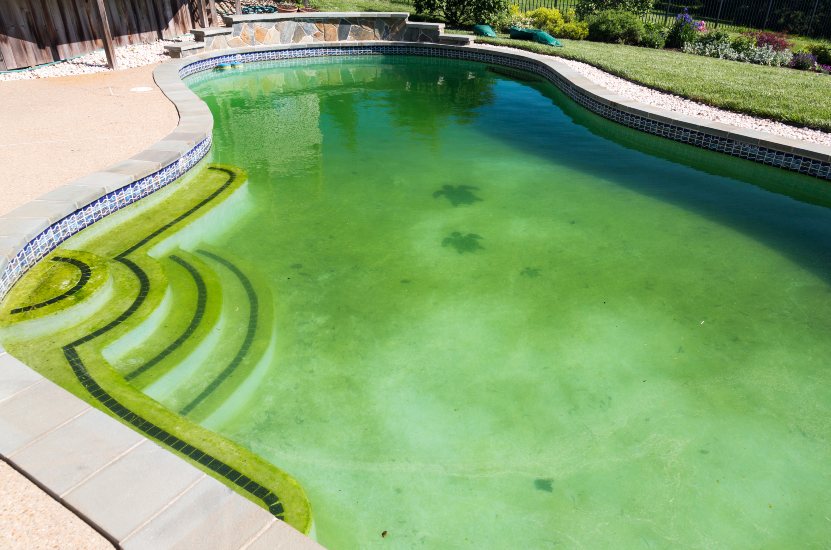
Why Does Your Ponte Vedra Pool Turn Green Overnight (And How Do You Stop It)?
Jun. 22, 2026
Why Does Pool Care in Jacksonville Need to Change Throughout the Year?
Contact Us
Where Vision and Possibility Meet
Call Now
